OpenClaw vs Forge Architecture: Why Enterprise AI Agents Need Outbound-Only Networking
Forge Team · March 2026 · 8 min read
Forge is often described as “OpenClaw for enterprise environments.” The reason comes down to a single architectural decision: how agents communicate with the outside world.
OpenClaw proved that AI agents work. With 68,000+ GitHub stars and support for 22+ channels, it demonstrated that agents can autonomously navigate environments, execute multi-step workflows, and deliver real value. That contribution to the AI ecosystem is significant and worth acknowledging.
But when enterprise security teams evaluate agent frameworks for production deployment, they focus on network architecture first. And that’s where the two frameworks diverge completely.
The Inbound Gateway Model
OpenClaw’s architecture centers on a Gateway process that binds to a local WebSocket address and requires remote connectivity through tunnels (ngrok, Tailscale Funnel, SSH forwarding) or direct port exposure. This is the inbound gateway model — external services need a path into your infrastructure to communicate with the agent.
For personal use, this is a reasonable tradeoff. The user controls the environment, the blast radius is limited to one machine, and the convenience of direct connectivity outweighs the security cost.
For enterprise environments, the calculus is different:
- Zero-trust policies prohibit inbound connections to agent workloads
- Network segmentation is violated by tunnels that bypass firewall rules
- Compliance frameworks (SOC 2, HIPAA, PCI DSS) require documented network controls
- Security teams flag any service that requires inbound port exposure
The architecture isn’t wrong — it’s designed for a different environment.
The Outbound-Only Model
Forge takes the opposite approach. Agents initiate all connections outbound. No ports are exposed. No tunnels are needed. No inbound pathways exist.
This is enforced at multiple levels:
- Per-skill egress allowlists — Each SKILL.md declares the domains it needs. The runtime blocks all other outbound traffic.
- No listening sockets — The agent runtime never binds to a port or accepts incoming connections.
- Runtime sandboxing — Skills execute in isolated environments with resource limits, preventing lateral movement.
- Cryptographic build signing — Deployed agents are verified against reviewed and approved builds.
The outbound-only model preserves the network boundaries that enterprise security teams require while still enabling agents to interact with external services.
Architecture Comparison
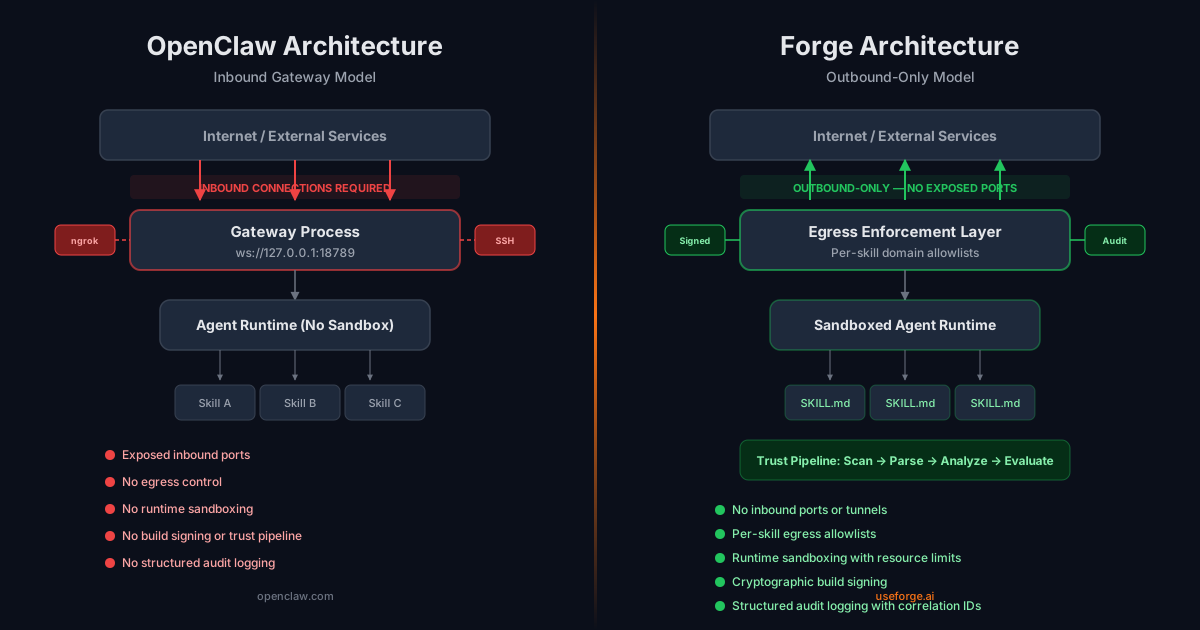
The diagram above illustrates the fundamental difference. On the left, OpenClaw’s inbound gateway requires external services to reach into your infrastructure. On the right, Forge’s outbound-only model keeps all connections initiated from within, with egress enforcement controlling where those connections go.
What This Means for Enterprise Security Teams
When a security team evaluates an agent framework, they ask specific questions:
| Question | OpenClaw | Forge |
|---|---|---|
| Does it require inbound ports? | Yes (gateway + tunnels) | No |
| Can we control egress per-skill? | No | Yes (domain allowlists) |
| Are agent builds signed? | No | Yes (cryptographic) |
| Can it run in air-gapped environments? | No | Yes |
| Does it produce structured audit logs? | Standard logs | Correlation ID traces |
| Is there runtime sandboxing? | No | Yes (resource-limited) |
Forge focuses on the enterprise deployment constraints that OpenClaw was not designed to address. This isn’t a quality judgment — it’s a recognition that personal agents and enterprise agents serve fundamentally different environments.
Different Environments, Different Requirements
OpenClaw is an excellent personal agent framework. If you’re an individual developer who wants a fast, capable agent for personal productivity, OpenClaw delivers.
Forge exists for the next step — when agents move from personal tooling into organizational workloads where security, compliance, and operational controls are non-negotiable.
The choice isn’t about which framework is “better.” It’s about which environment you’re deploying into.
Learn More
- Forge vs OpenClaw — Full Comparison — Feature-by-feature breakdown
- Enterprise Comparison Page — Detailed analysis with FAQ
- Running AI Agents Securely in Enterprise — Deep dive into enterprise security
- Getting Started with Forge — Deploy your first agent in minutes